Avril needed a way to manage increasingly complex production processes — not by analyzing more data, but by keeping processes aligned with current conditions as they run.
By changing how processes are operated, they removed the need to interpret hundreds of parameters and gained a more consistent, reliable way to manage performance across the business.
Key outcomes:
- Improved yield and energy efficiency
- Reduced waste across production processes
- More effective maintenance strategies
- Expanded optimization across multiple functions
- Greater alignment between operations and business performance
When More Parameters Don’t Improve Performance
For over 35 years, Avril has focused on optimizing performance through structured methodologies and continuous improvement.
Those approaches delivered meaningful gains. But by 2020, progress became harder to sustain.
Each production cycle generated between 700 and 1,000 parameters.
Teams had more data than ever — but maintaining consistent performance became increasingly difficult.
The issue was no longer visibility.
It was keeping the process aligned under changing conditions without having to interpret that complexity.
When Analysis Can’t Keep Up
To manage this, teams relied on experience, historical analysis, and periodic adjustments.
But with so many interacting variables, it was difficult to maintain alignment during production.
Adjustments were often made after performance had already shifted.
Applying improvements consistently across runs was challenging.
At this level of complexity, analysis alone wasn’t enough.
Avril needed a way to run the process based on current conditions — without relying on interpretation after the fact.
Running the Process Based on Current Conditions
To address this, Avril introduced a new way of running the process — one that adapts in real time as conditions change.
Instead of interpreting hundreds of parameters, teams began operating the process based on current conditions as production runs.
The process stays aligned without requiring teams to determine which variables matter in the moment.
This shifted how teams operate — from interpreting complexity to running the process directly under current conditions.
This created a more direct link between process behavior and how operations are run, allowing teams to focus on improving performance rather than analyzing it.
Applying This Approach Across Operations
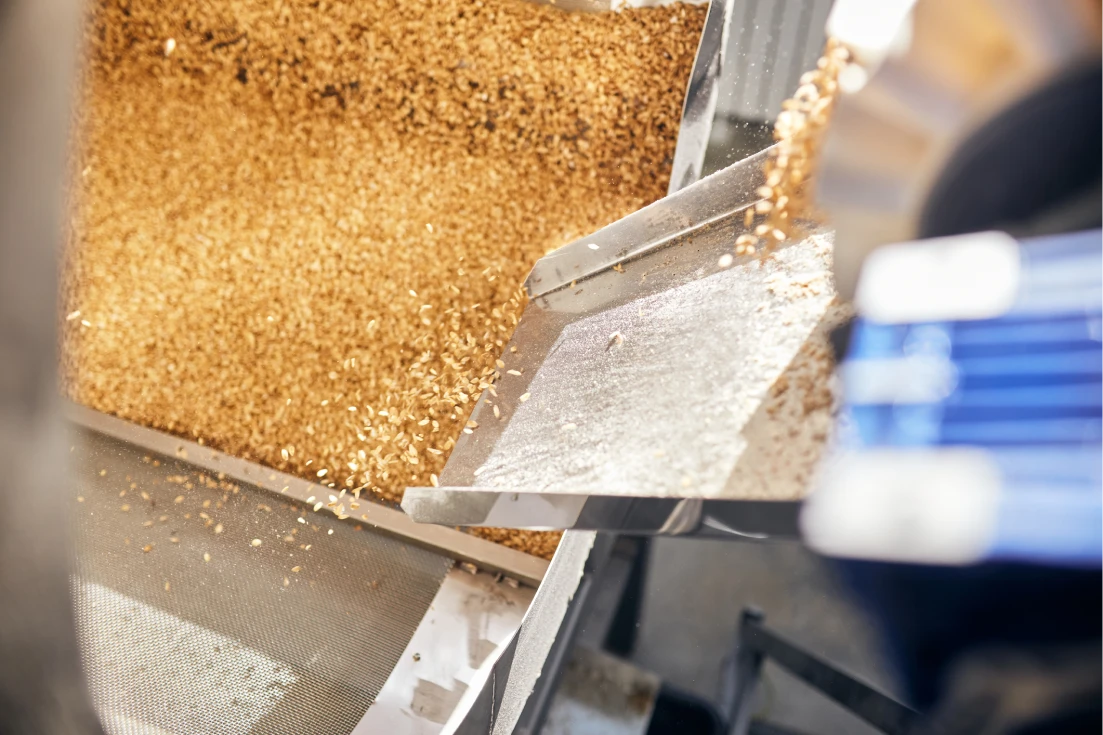
Avril first applied this approach to its oilseed crushing process, where performance depends on how multiple variables interact during production.
With the process continuously aligned to current conditions, teams gained a more consistent way to manage output, efficiency, and resource use.
This also changed how maintenance was approached.
Teams could identify when performance conditions were beginning to shift and act earlier — improving reliability without adding complexity.
As the approach proved effective, Avril extended it beyond production.
The same logic was applied to logistics, supply chain coordination, and broader operational planning — improving alignment across the organization.
Results
By keeping processes aligned with current conditions with Real-Time Process Optimizaton, Avril translated complexity into measurable operational and business impact:
Improved yield and energy efficiency
Better alignment between operating conditions and process settings reduced resource use while improving production consistency
Reduced waste across operations
More precise control over key variables limited material loss and increased overall efficiency
More effective maintenance strategies
Earlier visibility into performance shifts reduced unplanned interventions and improved equipment reliability
Expanded impact across operations
Applying the same approach beyond production improved coordination across logistics, supply chain, and plant-level performance
Scaling a New Way of Operating
What began as a way to manage process complexity became a broader operating model.
This approach is now embedded across Avril’s operations, providing a consistent way to manage performance as conditions change.
Instead of trying to interpret hundreds of parameters after the fact, teams run the process under current conditions — continuously aligned as those conditions evolve.
“We’re no longer trying to make sense of hundreds of parameters after the fact,” said Usseglio-Viretta. “We’re using them to run the process better as it happens.”