A Manufacturing Event That Delivered
Braincube’s Go Beyond Summit took place June 26–27 at Fenway Park, bringing together more than 50 manufacturing leaders for two days of practical, peer-driven learning. This wasn’t a vendor showcase or a hype-filled stage event. It was a hands-on working session focused on the realities of running a complex manufacturing environment in 2025 — complicated systems, relentless cost pressure, geopolitical shifts, and the daily push to deliver more with fewer resources.
The conversations didn’t sugarcoat the problems. Hidden waste, siloed systems, rising material costs, and a disconnect between tech investments and bottom-line results were front and center. This event gave industry leaders space to step away from the fire drill and get clear on what’s working — and where we all need to adjust.
Introducing Companion: Braincube’s New Generative AI Assistant
Braincube CEO Laurent Laporte introduced Companion, a generative AI assistant designed for process engineers. Built on large language models, Companion helps teams summarize production events, generate visuals, and investigate root causes, all through simple, natural language prompts.
Instead of relying on specialized analysts or complex query tools, engineers can now ask straightforward questions and get usable answers immediately. Companion helps remove the bottlenecks that slow teams down and keeps problem-solving closer to the point of impact.
When insights are this accessible, the pace of decision-making changes, and so does performance. Companion frees up time and energy, allowing teams to focus on driving improvements where they count.
Keynote to Kickoff: What Performance Leadership Really Means
Performance-expert Steve Magness opened the Summit with a keynote that challenged the usual definitions of leadership. Drawing from performance psychology, Magness made a compelling case for building systems that support decision-making under pressure, rather than relying on motivation or control.
His “4 Ps” framework — Pause, Process, Plan, Proceed — resonated with attendees facing constant production demands. Magness reminded us that most failures don’t come from a lack of effort, but from environments that don’t support clarity, autonomy, or adaptability.
The session offered a refreshing shift from productivity clichés. Instead of pushing teams harder, the focus was on building conditions where people can operate with purpose and resilience, even when things go wrong.
Customer Stories That Weren’t Just “Success Stories”
This year’s speakers brought honest accounts of what it takes to make transformation work.
Chuck Fornicola from Goodyear described how they used Braincube to improve alignment between quality, IT, and operations across 53 plants. His focus wasn’t on flashy features — it was on getting teams to speak the same language and pull in the same direction. For a company operating at that scale, alignment isn’t a “nice to have.” It’s the only way to ensure that improvements stick across sites, teams, and time zones.
Jesse Stephens and Cody Shirley from St. Croix Tissue highlighted a critical but often overlooked reality: tools only create value if people actually use them. Their breakthrough came when real-time data became accessible to the people closest to the process — operators. Once the data was in their hands, the conversations shifted. Teams didn’t just spot issues faster. They collaborated more effectively, made faster decisions, and delivered better results without adding complexity or extra layers of reporting.
Jackson Carvalho from Gerdau focused on a lesson many manufacturers learn too late: process experts must lead the digital agenda. When your data strategy starts from the plant floor — from the people who know the process inside out — adoption is smoother, results come faster, and the tools actually solve the right problems. But when strategy is built from the top down without context, it rarely survives past the pilot phase.
Arun Thomas from CertainTeed shared a refreshingly grounded perspective: transformation doesn’t need to start big. It starts small — as a seed. Their story showed how small wins, when nurtured, can grow into scalable change. By building momentum deliberately and earning buy-in along the way, they turned what started as an experiment into a cultural shift.
Karl Leetma from Agnico Eagle Mines gave us a look inside the complexities of gold mining — and how Braincube is helping uncover untapped opportunities for productivity. Their focus was clear: how do you surface insights that lead to real cost savings and process improvements in one of the world’s most demanding production environments? Their example reminded us that when it comes to operational excellence, data must serve the frontlines — not just the boardroom.
The shared message? Operational improvement doesn’t scale through software alone — it scales when teams align around how to use it.
These weren’t surface-level success stories. They were reminders that real transformation is rarely loud or instant. It builds over time. It starts with context, earns credibility through results, and sticks when people at every level — from mine sites to tissue mills — are empowered to make smarter decisions every day. Digital tools only matter when they change the way people work. And that kind of change doesn’t happen from a rollout. It happens when better decision-making becomes part of the daily routine — grounded in experience, driven by people, and measured by outcomes that matter.
The Real Power of Peer Learning
Some of the most valuable moments at the Summit happened between sessions. During the partner panel with InSource Solutions and GrayMatter, leaders shared what didn’t work before getting to what did. It opened the door for others to do the same.
Throughout the event, there was a noticeable lack of ego. Operators, engineers, and executives traded hard-won lessons without spinning them. That honesty made the conversations useful, and made the learning stick.
In a landscape full of tech noise and productivity jargon, these kinds of unfiltered exchanges are rare. They’re also exactly what manufacturers need to move forward faster.
An Innovation Showcase That Focused on What Matters
Braincube’s Innovation Showcase focused on outcomes that move the needle: less waste, better throughput, more agile operations. Rather than highlighting features, the demos showed how teams are using Braincube inside their actual workflows — not in theory, but in production.
Every example reinforced the same idea: the real challenge isn’t a lack of data, it’s a lack of context, or getting usable insight into the hands of the people who can act on it in the moment. Braincube’s tools help bridge that last mile — making data useful where it counts most.
Closing that loop is what turns improvement from a project into a habit.
What Makes a Good Event? This One Had 4 Things
The Go Beyond Summit worked because it was built around four essentials:
- The people – Experienced manufacturing leaders who showed up to share
- The content – Focused on solving real problems, not showcasing trends
- The size – Kept intentionally small to foster depth and trust
- The location – Fenway Park brought energy and purpose to every conversation
What set this event apart wasn’t the venue or the speakers — it was the tone. The organizers created a space where peers could learn from each other and leave with something more than notes. They left with next steps.
Why This Event Mattered — and What Comes Next
The Summit ended with a Red Sox vs. Blue Jays game — a shared moment of fun after two days of clarity and momentum. But the real impact of the event will show up in how teams apply what they learned.
This wasn’t a conference about possibilities. It was a working session about execution — how to reduce waste, act faster, and make decisions that protect margins in an unpredictable environment.
Braincube’s launch of Companion signals a clear focus: helping manufacturers operate with greater speed, alignment, and confidence. These aren’t standalone tools. They’re part of a broader system built to eliminate waste and turn data into results.
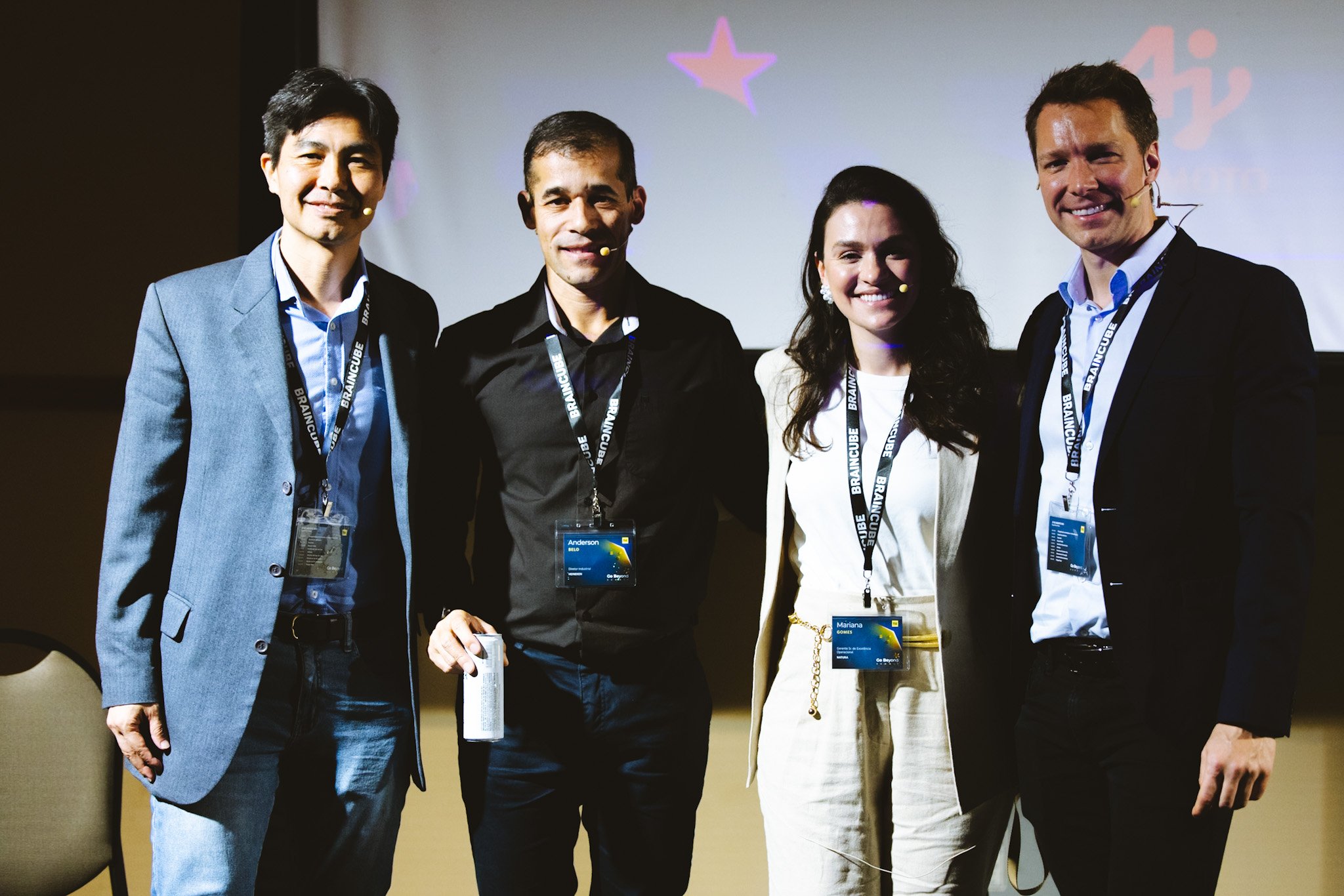
Next up, Braincube will bring Go Beyond to Brazil on August 27th and France on October 8th and 9th, and recaps from Boston will be shared with the events community.
If you’re ready to improve margins through smarter decisions and more agile operations, now’s the time to act.